Photo cleanup guide
How to offload unused apps on iPhone (and when photo cleanup frees more space)
Offload unused apps on iPhone to free storage: turn on Offload Unused Apps, know what offload keeps vs delete, and when photo clutter still fills the phone.
By Pikondo team · Updated September 17, 2026
Need to free iPhone storage? Offload unused apps removes the app binary but keeps your documents and data. This guide shows where Offload Unused Apps lives, how to turn it on, what it does versus deleting an app, and when photos still fill the phone. Pikondo helps with photo clutter only—it does not offload apps, manage iOS Storage settings, or reclaim app documents.
Where Offload Unused Apps lives
- Open Settings on your iPhone.
- Tap General, then iPhone Storage.
- Near the top, find Offload Unused Apps.
- You can turn the automatic toggle on, or scroll the app list and offload one app at a time.
What offload does vs delete app
Offload removes the app from your device but keeps its documents and data. The icon stays on the Home Screen with a cloud badge. Tap it later to redownload the app from the App Store. Your local app files come back with the download.
Delete App removes the app and its documents and data from the phone. That frees more space, but you lose local app data unless it lives in iCloud or another backup. Offload is the safer first step when you still want the app later.
How to enable Offload Unused Apps
- Go to Settings → General → iPhone Storage.
- Turn on Offload Unused Apps if you want iPhone to offload apps you rarely open when space is tight.
- Or tap an app in the list → Offload App → confirm. The app leaves; documents and data stay.
- To remove an app and its data, choose Delete App instead—only when you are sure you do not need that local data.
- Check Available under iPhone Storage after a moment. Freed space shows once the offload finishes.
When offload helps / when it does not
Offload helps when large apps you seldom open take most of the free space. Games, editing tools, and travel apps are common wins. You keep documents and can reinstall when you need the app again.
Offload does not shrink your photo library, iCloud Photos usage, or files inside apps you still use. If Photos or videos dominate iPhone Storage, offloading apps alone will not fix the warning.
It also does not free iCloud storage. Offload is a local-device tool. For iCloud, use Manage Account Storage—see /blog/free-up-icloud-storage.
Photos still fill storage
Open Settings → General → iPhone Storage and check how large Photos is. Screenshots, duplicates, and blurry shots often take more space than one unused app.
Delete what you do not need in Photos, then empty or wait out Recently Deleted so space frees for real. A short review of clutter can free more room than offloading a few apps.
For a full device-storage routine next to offload, see /blog/free-up-iphone-storage.
How Pikondo fits (and where it stops)
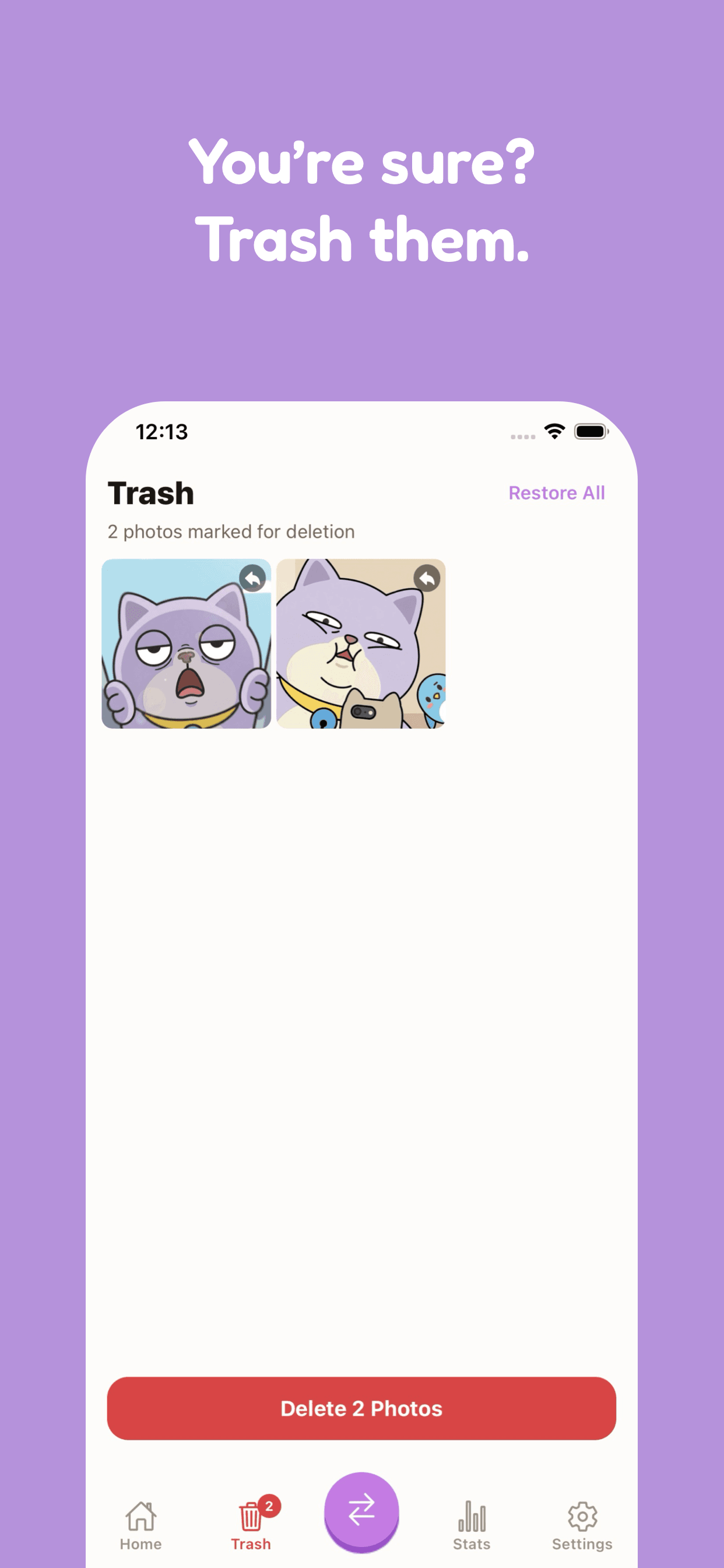
Pikondo is an on-device photo cleaner. Swipe to keep or mark screenshots, duplicates, and blurry shots, review the marked list, then confirm. Confirmed deletions follow the same Recently Deleted rules as the Photos app.
Pikondo does not offload apps, manage iOS Storage settings, reclaim app documents, or turn Offload Unused Apps on or off. Use Settings for apps. Use Pikondo when photo clutter is what fills the phone.
Related guides
For storage and photo cleanup next to offloading apps, see freeing iPhone storage at /blog/free-up-iphone-storage, freeing iCloud storage at /blog/free-up-icloud-storage, deleting photos at /blog/how-to-delete-photos-iphone, deleting duplicates at /blog/delete-duplicate-photos-iphone, clearing screenshots at /blog/delete-iphone-screenshots, removing blurry shots at /blog/delete-blurry-photos-iphone, emptying Recently Deleted at /blog/empty-recently-deleted-photos-iphone, compressing or sharing smaller copies at /blog/compress-photos-iphone, organizing keepers at /blog/organize-photos-iphone, transferring photos to a PC at /blog/transfer-photos-iphone-to-pc, hiding photos (privacy, not storage) at /blog/hide-photos-iphone, and recovering from Recently Deleted at /blog/recover-deleted-photos-iphone.
The key point
Offload unused apps frees local space while keeping app documents and data. Turn on Offload Unused Apps or offload one app at a time in iPhone Storage. If Photos still dominates storage, clean clutter and clear Recently Deleted. Pikondo helps with photo review only—it does not offload apps or manage Storage settings.
Frequently asked questions
- How do I offload unused apps on iPhone?
- Open Settings → General → iPhone Storage. Turn on Offload Unused Apps for automatic offloads, or tap an app → Offload App. The app is removed; documents and data stay. Tap the icon later to redownload the app.
- Does offloading an app delete my data?
- No. Offload keeps documents and data on the phone. Delete App removes the app and its local documents and data. Choose offload when you may want the app again.
- Will offloading apps free space if my Photos library is huge?
- Only the space those apps used. It does not shrink your photo library. Check iPhone Storage: if Photos is the large item, delete clutter and empty Recently Deleted. Offload apps when unused apps are the problem.
- Does Pikondo offload apps or manage iPhone Storage?
- No. Pikondo helps you review and delete screenshots, duplicates, and blurry shots on the device. It does not offload apps, change Offload Unused Apps, reclaim app documents, or manage iOS Storage settings.