Photo cleanup guide
How to manage iPhone storage (Photos, apps, and what actually frees space)
Manage iPhone storage: check what fills the phone, clean Photos and large videos, offload apps, and know what actually frees space vs what only looks helpful.
By Pikondo team · Updated September 21, 2026
Searching how to manage iPhone storage usually means the phone feels full—Photos, apps, or iCloud warnings. This guide shows where to check what fills the device, what frees space for real, and when photo clutter is the main drain. Pikondo helps review and delete screenshots, duplicates, and blurry shots on device. It does not manage iOS Storage settings, offload apps, clear Safari cache, empty Recently Deleted, or buy iCloud.
Start in iPhone Storage
- Open Settings → General → iPhone Storage.
- Wait for the category bars and app list to finish loading.
- Note the largest items: Photos, Apps, Messages, System Data, or something else.
- Tap Photos or a heavy app for more detail before you delete anything.
What usually fills an iPhone
Photos often dominates when the library has years of shots, screenshots, duplicates, and long videos. Apps grow with documents and data. Messages can hold media. System Data and caches matter less than people expect when Photos is already huge.
If iPhone Storage shows Photos as the large bar, cache tips alone will not fix a full phone. See /blog/free-up-iphone-storage for the broader cleanup path.
When Photos and videos fill storage
If storage feels full because of photos, start with clutter you do not need: screenshots, near-duplicates, and blurry shots. Then delete large videos you no longer want—short clips and 4K recordings add up fast.
Delete in Photos, then empty or wait out Recently Deleted so space frees for real. For steps, see /blog/how-to-delete-photos-iphone, /blog/delete-iphone-screenshots, /blog/delete-duplicate-photos-iphone, /blog/delete-blurry-photos-iphone, and /blog/empty-recently-deleted-photos-iphone.
Apps, offload, and cache (separate levers)
For apps: Settings → General → iPhone Storage. Offload Unused Apps removes the app binary but keeps documents and data. Delete App removes the app and its local data. See /blog/offload-unused-apps-iphone.
Safari cache is different again. Clear History and Website Data frees browser data, not your photo library. See /blog/clear-cache-iphone. Neither path replaces cleaning Photos when the library is what fills the phone.
iCloud storage is not the same as device storage
iPhone Storage is space on the device. iCloud storage is your Apple account quota for Photos sync, backups, Drive, and more. Freeing one does not always free the other.
If the warning is about iCloud, manage account storage and Photos sync separately—see /blog/free-up-icloud-storage. Pikondo does not buy iCloud or change iCloud settings.
How Pikondo fits (and where it stops)
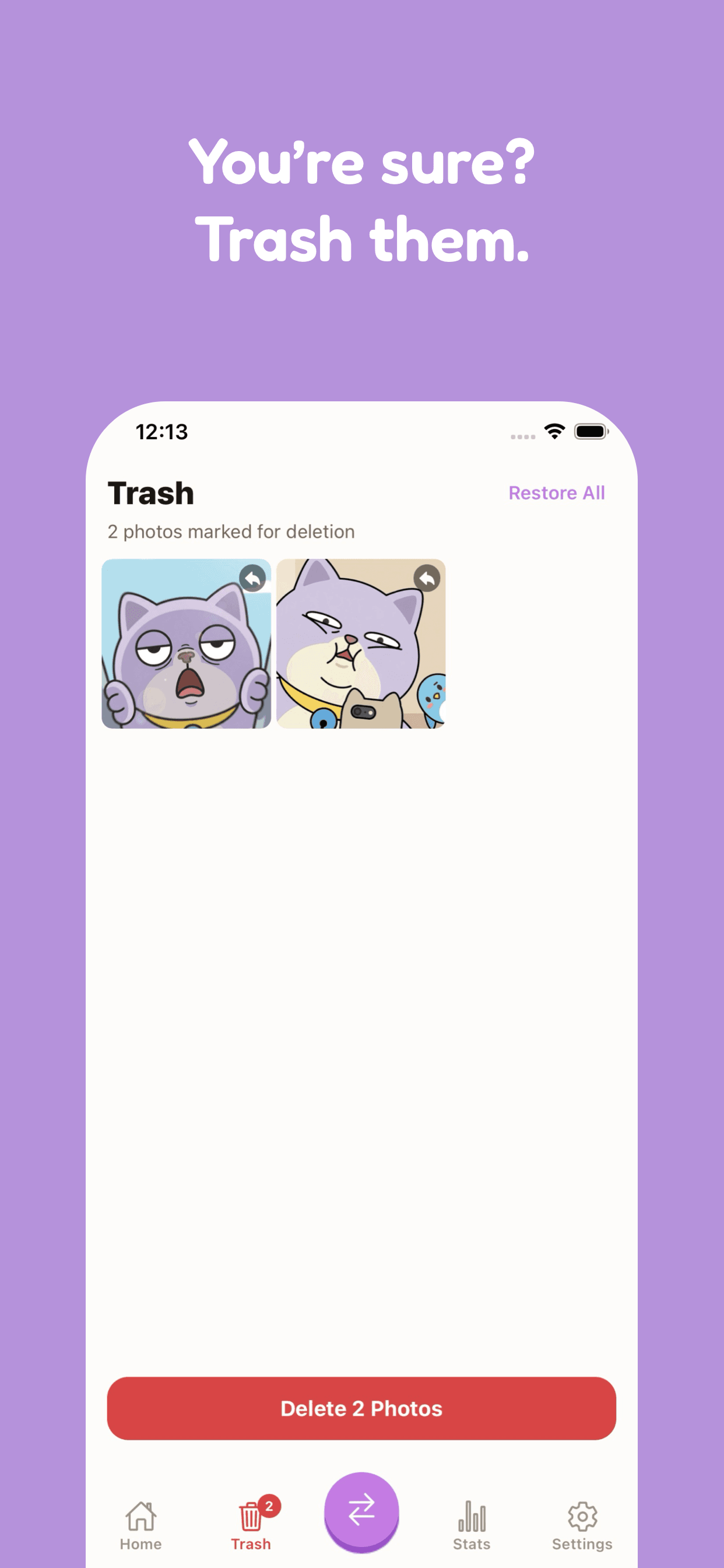
Pikondo is an on-device photo cleaner. Swipe to keep or mark screenshots, duplicates, and blurry shots, review the marked list, then confirm. Confirmed deletions follow the same Recently Deleted rules as the Photos app.
Pikondo does not manage iOS Storage settings, offload apps, clear Safari cache, empty Recently Deleted, or buy iCloud. Use Settings for storage and apps. Use Pikondo when photo clutter is what fills the phone.
Related guides
For storage and cleanup next to managing iPhone storage, see freeing iPhone storage at /blog/free-up-iphone-storage, freeing iCloud storage at /blog/free-up-icloud-storage, clearing cache on iPhone at /blog/clear-cache-iphone, offloading unused apps at /blog/offload-unused-apps-iphone, deleting photos at /blog/how-to-delete-photos-iphone, deleting duplicates at /blog/delete-duplicate-photos-iphone, clearing screenshots at /blog/delete-iphone-screenshots, removing blurry shots at /blog/delete-blurry-photos-iphone, emptying Recently Deleted at /blog/empty-recently-deleted-photos-iphone, compressing or sharing smaller copies at /blog/compress-photos-iphone, organizing keepers at /blog/organize-photos-iphone, transferring photos to a PC at /blog/transfer-photos-iphone-to-pc, hiding photos (privacy, not storage) at /blog/hide-photos-iphone, and recovering from Recently Deleted at /blog/recover-deleted-photos-iphone.
The key point
To manage iPhone storage, check Settings → General → iPhone Storage first. Free space where the large bars are—often Photos and large videos, then apps. Pikondo helps with photo clutter review only. It does not manage iOS Storage settings, offload apps, clear Safari cache, empty Recently Deleted, or buy iCloud.
Frequently asked questions
- How do I manage iPhone storage?
- Open Settings → General → iPhone Storage to see what fills the phone. Free space in the largest categories—often Photos (including large videos), then apps (offload or delete). Empty Recently Deleted after photo deletes so space frees for real. iCloud warnings need a separate account-storage path.
- Why is iPhone storage full of photos?
- Screenshots, duplicates, blurry shots, and long or 4K videos add up over years. Check iPhone Storage → Photos. Delete clutter you do not need, then empty or wait out Recently Deleted. Cache clears alone will not shrink a large library.
- How do I delete large videos on iPhone?
- Open Photos, find the video (Albums → Videos or search), tap Select, choose the clip, then Delete. Empty or wait out Recently Deleted so the space returns. Large videos often free more space than many still photos.
- Does Pikondo manage iPhone Storage settings?
- No. Pikondo helps you review and delete screenshots, duplicates, and blurry shots on the device. It does not manage iOS Storage settings, offload apps, clear Safari cache, empty Recently Deleted, or buy iCloud.